Is at-home IPL hair removal safe? For many people, a properly selected and correctly used device can be a convenient way to reduce unwanted hair. But “at home” does not mean risk-free. Skin tone, hair color, recent sun exposure, medications, the treatment area, and the device’s instructions all matter.
This guide explains how intense pulsed light (IPL) works, who should be especially cautious, the side effects to recognize, and practical steps to take before your first session. If you’re still comparing methods, start with our at-home IPL hair removal guide.
How does at-home IPL hair removal work?
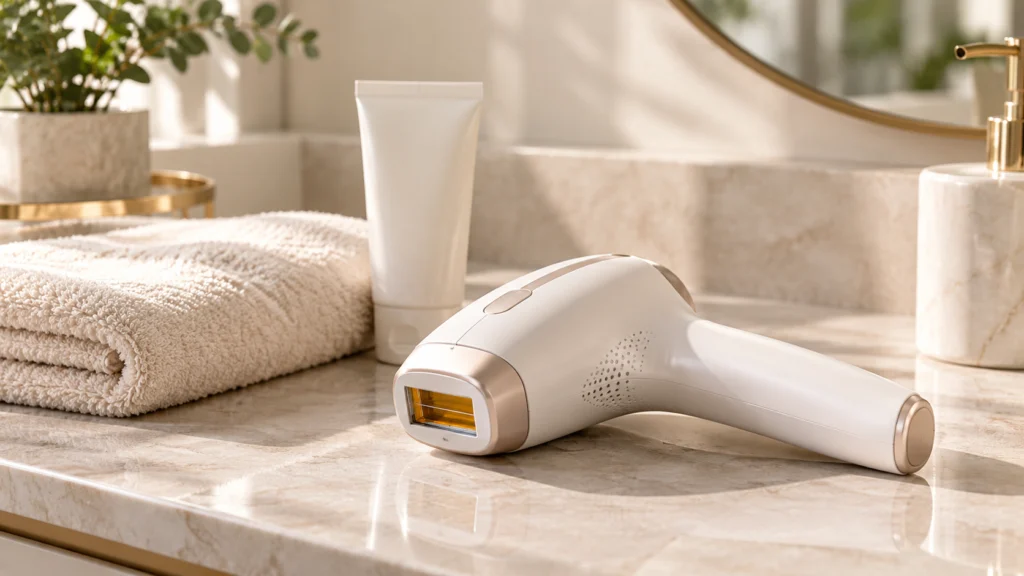
IPL devices send pulses of broad-spectrum light toward pigment in the hair. Absorbed light generates heat that can disrupt the follicle’s ability to produce hair. Because hair grows in cycles, multiple sessions are usually needed, and maintenance treatments may be necessary. IPL is not identical to the concentrated light used in professional laser treatments.
Home-use devices generally operate at lower energy levels than professional equipment, but they can still cause injury when used incorrectly or on unsuitable skin. A 2023 postmarketing analysis of reported adverse events for a home-use IPL device identified skin pain, burns, and redness among the most commonly reported problems. This does not mean everyone will experience them; it does mean that the safety instructions deserve careful attention.
Is at-home IPL hair removal safe for every skin tone?
No single IPL device is suitable for every skin tone. Light-based hair removal relies on a contrast between hair pigment and surrounding skin. When the skin contains more melanin, it may absorb more of the light energy, increasing the possibility of burns or unwanted pigment changes. Device compatibility varies by model, so a general online chart cannot replace the manufacturer’s approved skin-tone range.
Lighter skin with darker hair
This combination is often a better match for light-based hair reduction because the dark hair provides a clearer target. Even so, a recent tan, irritated skin, or an overly aggressive setting can raise the risk of side effects.
Medium and deeper skin tones
Some home IPL devices are not designed for deeper skin tones. Others include skin sensors or settings intended for a specified range. Check the exact model’s compatibility chart rather than assuming a sensor makes every treatment safe. If your skin tone falls outside the stated range—or you are unsure—do not use the device until you have obtained professional guidance.
Very light, red, gray, or white hair
Hair with little of the pigment targeted by IPL may respond poorly. If your hair is blonde, red, gray, or white, confirm the manufacturer’s hair-color guidance before purchasing. Do not increase the intensity to compensate for poor suitability.
What are the possible side effects and risks?
Temporary warmth, mild redness, or discomfort can occur after light-based hair removal. More serious problems include burns, blisters, changes in skin color, and, less commonly, scarring. Eye exposure is another important concern: published safety reviews have raised questions about the hazards of looking directly at flashes from certain devices, particularly if protective mechanisms fail.
Stop treatment if you experience pronounced pain, blistering, or an unusual skin reaction. Do not continue treating the affected area. Seek medical advice promptly for significant burns, persistent pigment changes, eye symptoms, or signs of infection.
Who should avoid IPL or seek medical advice first?
Do not treat skin that is sunburned, recently tanned, broken, inflamed, or otherwise outside your device’s approved conditions. Avoid treating tattoos, dark moles, and pigmented lesions unless the device’s instructions explicitly address them; these areas can absorb additional light. Never use an IPL device near the eyes or on body areas the manufacturer prohibits.
Ask a dermatologist or other qualified clinician before trying IPL if you have a history of abnormal scarring, a condition affecting pigmentation, unexplained skin lesions, or a medication or medical condition that increases light sensitivity. Pregnancy and breastfeeding guidance varies by device, and safety data may be limited; follow the manufacturer’s contraindications and consult your clinician when uncertain. A home device is not a substitute for evaluating a changing mole or other suspicious skin lesion.
How to use at-home IPL hair removal more safely
1. Confirm your device is suitable
Read the exact model’s skin-tone and hair-color charts, approved body areas, contraindications, and eye-safety instructions. Do not rely on a retailer’s general product description. For example, anyone considering a JOVS at-home hair removal device should check the current manual for that specific model before deciding whether it fits their needs.
2. Review your skin and recent sun exposure
Postpone treatment if your skin is tanned, sunburned, or irritated. Avoid deliberate tanning and follow your device’s instructions about sun exposure and self-tanning products before and after use. Protect exposed skin with appropriate clothing and broad-spectrum sunscreen.
3. Prepare the treatment area correctly
Follow the manufacturer’s preparation steps, which commonly include shaving rather than waxing or plucking before a session. Start with clean, dry skin unless your model explicitly requires a different method. Remove products that the manual says could interfere with treatment.
4. Perform the recommended test
Use the patch-test procedure and waiting period specified in your device’s manual. A test can help identify an immediate reaction, but it cannot guarantee that future sessions will be free of side effects.
5. Protect your eyes
Never look directly into the flash window. Follow the device’s eye-protection directions, including use of any required protective eyewear. Do not substitute ordinary sunglasses for protective goggles if the manual calls for specific protection. Keep the device away from children.
6. Respect settings, spacing, and schedules
Begin only at a setting permitted for your skin tone and body area. Do not repeatedly flash the same spot or exceed the recommended treatment frequency in the hope of faster results. More intensity is not automatically more effective or safer.
7. Monitor your skin afterward
Follow the manufacturer’s aftercare instructions, avoid additional irritation, and pause treatment if your skin reacts unexpectedly. If symptoms are more than mild or do not resolve, contact a healthcare professional.
At-home IPL vs. professional laser: which is safer?
Neither option is universally safer for every person. A home IPL device offers convenience but places responsibility for screening and correct use on the consumer. Professional laser treatments allow a trained clinician to assess skin characteristics, choose equipment, and manage complications, although professional procedures also carry risks.
People with deeper skin tones, complex medical histories, or uncertainty about device compatibility may benefit from a dermatologist’s assessment before choosing a light-based treatment. The American Academy of Dermatology emphasizes the importance of professional expertise and careful patient selection for laser hair removal.
What results should you realistically expect?
Think of home IPL as a method for long-term hair reduction, not a promise of permanent, complete removal. Results depend on hair color, skin tone, treatment area, consistency, and the specific device. Hair may become finer or grow back more slowly, but maintenance sessions can be needed. If a product claims instant or guaranteed permanent results for everyone, treat that claim skeptically.
Frequently asked questions
Can IPL cause burns at home?
Yes. Burns are a recognized potential adverse effect, especially when a device is used on unsuitable skin, at inappropriate settings, or contrary to its instructions.
Can I use IPL on a tan?
Do not use IPL on recently tanned or sunburned skin unless your device’s instructions specifically permit the condition, which many do not. Wait until your skin is back within the approved treatment range.
Is IPL safe for the face?
Only use it on facial areas expressly approved for your particular device. Never use it near the eyes, eyebrows, or eyelashes. Facial hair and skin can require different precautions from body areas.
Does IPL work on all hair colors?
No. Very light blonde, red, gray, and white hair often responds poorly because it contains less of the pigment the light targets. Check your model’s guidance.
Should I use IPL if I have sensitive skin?
“Sensitive skin” covers many different conditions. Check the manual, avoid treating irritated or damaged skin, and ask a dermatologist if you have an ongoing skin condition or a history of significant reactions.
The bottom line
At-home IPL hair removal can be a practical option when the device matches your skin and hair characteristics and you follow the instructions closely. The safest decision starts with checking compatibility—not with choosing the strongest setting or the fastest advertised result. When in doubt, consult a dermatologist before exposing your skin to repeated light-based treatments.
Sources and further reading
- American Academy of Dermatology: 6 ways to remove unwanted hair
- American Academy of Dermatology: Laser hair removal FAQs
- Postmarketing surveillance of adverse events associated with a home-use IPL device
- Review of safety considerations for home-use IPL devices
Editorial note: This article provides general educational information and does not replace medical advice. Product instructions and suitability vary by model.