Smooth skin shouldn’t have to mean endless shaving, frequent waxing appointments, or constantly planning around regrowth.
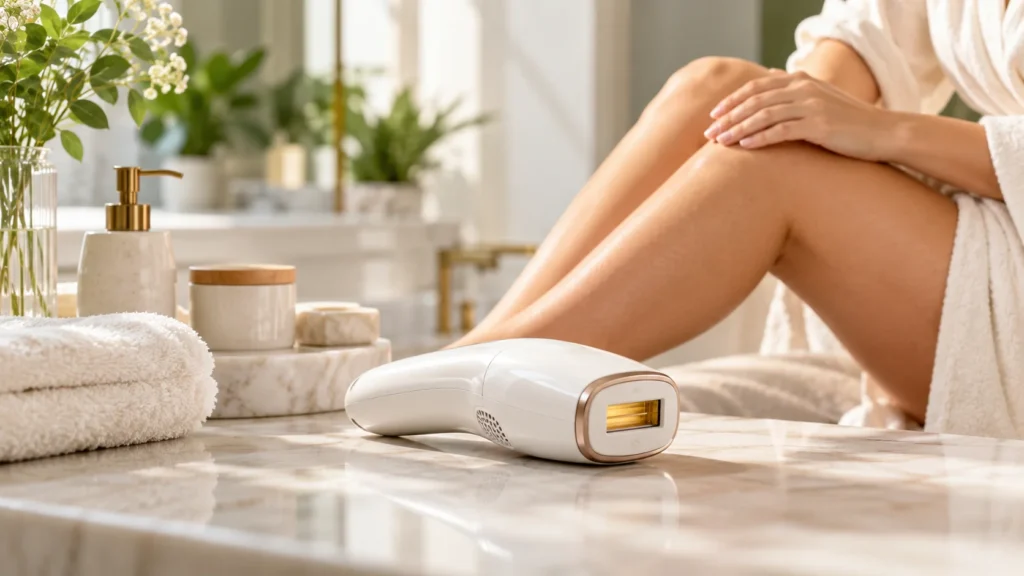
For women looking for a longer-lasting approach to hair removal, at-home IPL devices have become an increasingly interesting option. They offer the convenience of treating unwanted hair at home, without scheduling professional appointments.
But how well does IPL actually work? Is it safe for every skin tone? And is buying a device worth it compared with simply sticking to a razor?
The answer depends on your skin tone, hair color, expectations, budget, and willingness to follow a consistent treatment routine. This guide explains what at-home IPL can—and cannot—do, how it compares with other hair removal methods, and what to consider before investing in a device.
What Is At-Home IPL Hair Removal?
IPL stands for Intense Pulsed Light. It is a light-based technology designed to reduce hair growth over time. An IPL device emits pulses of broad-spectrum light. Pigment in the hair absorbs some of that light energy, which is converted into heat and can disrupt the structures responsible for hair growth.
Because hairs grow in different cycles, multiple sessions are needed. Treating an area once will not affect every hair equally. IPL is different from a razor or waxing strip: instead of simply cutting or pulling out visible hair, it targets the hair-growth process.
That is why IPL is generally discussed as a long-term hair-reduction method, not an instant hair-removal solution. Published research on home-use light-based devices suggests hair reduction is possible, but effectiveness varies by device, schedule and individual characteristics.
IPL vs. Laser Hair Removal: What’s the Difference?
IPL and laser hair removal both use light energy to target hair pigment, but they are not identical. IPL emits a broad spectrum of light, while a laser uses a more concentrated wavelength or narrow range of wavelengths.
Professional laser treatments can be customized by trained practitioners. At-home IPL devices are designed for consumer use and typically operate at lower energy levels. That difference affects treatment intensity, convenience, suitability and expected results.
| Feature | At-Home IPL | Professional Laser |
|---|---|---|
| Technology | Broad-spectrum pulsed light | Targeted laser light |
| Location | At home | Clinic or medical practice |
| Convenience | Self-scheduled | Appointments required |
| Cost model | Upfront device purchase | Per-session or package fees |
| Treatment course | Repeated sessions and maintenance | Multiple professional sessions |
| Skin-tone suitability | Limited by the specific device | Depends on laser type and practitioner expertise |
| Results | Gradual hair reduction | Potentially more substantial long-term reduction |
Neither option guarantees that every treated hair will disappear forever. The American Academy of Dermatology notes that professional laser hair removal requires multiple treatments and that some people need maintenance. It also emphasizes choosing an experienced practitioner, especially for darker skin tones.
For someone who values convenience and is an appropriate candidate, at-home IPL may be worth exploring. For someone with a deeper skin tone or complex treatment needs, professional consultation may offer safer and more suitable options.
Who Is a Good Candidate for IPL Hair Removal?
IPL works by targeting pigment in hair. Generally, stronger contrast between dark hair and lighter surrounding skin makes treatment easier and more effective.
Skin tone matters
Many consumer IPL devices are not suitable for very dark skin tones because melanin in the skin can absorb light energy, increasing the risk of burns or pigmentation changes. Compatibility varies by device. Never assume that a product marketed for a broad range of skin tones is appropriate for everyone.
For example, JOVS states that its Venus Pro II is intended for Fitzpatrick skin types I–V and should not be used on type VI. This is the manufacturer’s stated compatibility range, not an independent clinical assessment of every user’s safety. See the manufacturer’s guidance.
Hair color matters, too
IPL generally works better on darker hair because darker pigment absorbs more light. Light blonde, gray, white and red hair often respond poorly or may not be treatable with consumer IPL devices. If your hair is very light, purchasing an IPL device without checking compatibility could lead to disappointing results.
When to seek professional advice
Ask a dermatologist before considering IPL if you have a history of unusual pigmentation, a photosensitivity condition, use photosensitizing medication, or are uncertain whether your skin is suitable. Do not treat recently tanned or sunburned skin. Avoid treating tattoos, suspicious skin lesions, irritated or broken skin, and areas prohibited by the manufacturer’s instructions.
Pregnancy, medical conditions and medication-related restrictions should also be checked against the device’s official guidance and with an appropriate healthcare professional.
IPL vs. Shaving vs. Waxing: Which Makes More Sense?
There is no single best hair removal method for everyone. The right choice depends on how long you want results to last, how sensitive your skin is, and how much time and money you are comfortable spending.
| Method | Main Advantage | Main Limitation | Best For |
|---|---|---|---|
| Shaving | Fast, accessible, inexpensive initially | Frequent regrowth | Quick, flexible maintenance |
| Waxing | Removes hair from the root | Discomfort and repeated appointments | Temporary smoothness lasting longer than shaving |
| Depilatory creams | No razor required | Possible irritation; product-specific restrictions | Non-shaving temporary removal |
| At-home IPL | Potential long-term reduction | Device cost, suitability limits, repeated treatments | Eligible users seeking less frequent maintenance |
| Professional laser | Professional assessment and treatment | Higher cost and appointments | Clinician-guided approach |
When shaving is the better choice
Shaving is practical when you want a quick result without a significant upfront purchase. It also makes sense if your hair or skin characteristics are unsuitable for IPL. A well-designed razor and a gentle shaving routine may be all you need.
When waxing makes sense
Waxing removes hair from the root, so results typically last longer than shaving. However, it can be uncomfortable, may irritate sensitive skin and requires hair to regrow to a suitable length before another session.
When IPL may be worth considering
IPL becomes more appealing if you regularly remove hair from the same areas and would prefer a gradual reduction in regrowth. The trade-off is consistency: you must follow the device’s schedule, monitor your skin and allow time for results. Think of IPL as a routine rather than a one-time beauty treatment.
What Results Can You Realistically Expect From At-Home IPL?
One of the biggest mistakes shoppers make is expecting immediately hair-free skin. IPL results usually develop gradually. Some users may notice slower growth or finer regrowth after several sessions, while others need more time. Results vary by body area, hair characteristics, device and treatment consistency.
It is important to distinguish between hair reduction and permanent hair removal. Long-term reduction means fewer hairs regrow or regrowth becomes less noticeable. It does not necessarily mean every hair follicle has been permanently eliminated. Maintenance treatments may also be necessary.
Published reviews of home-based dermatologic devices have found hair-count reductions in studied populations, but they do not establish one universally appropriate treatment schedule.
How to evaluate your own progress
Rather than judging the result after one session, track changes over time. Use consistent lighting and take photos of the same treatment area at regular intervals. Pay attention to regrowth speed, hair density and skin reactions. Avoid treating more frequently or increasing intensity beyond the manufacturer’s instructions to speed up results.
Is At-Home IPL Hair Removal Safe?
At-home IPL can be a reasonable option for suitable users who follow device instructions carefully, but it is not risk-free. Potential side effects include temporary redness, discomfort, irritation, burns, blisters and changes in pigmentation. Reports of adverse reactions to home-use light-based devices reinforce the importance of following suitability guidance and instructions.
Safety habits that matter
- Check the manufacturer’s skin-tone and hair-color compatibility chart.
- Read the complete instructions and contraindications before treatment.
- Perform the recommended skin test before treating a larger area.
- Use only approved treatment areas and settings.
- Avoid recently tanned, sunburned or irritated skin.
- Follow the device’s eye-safety instructions and never flash toward the eyes.
- Stop treatment if you experience significant pain, blistering or an unusual reaction.
If you experience a burn or persistent skin reaction, stop using the device and seek medical advice. Cooling features may make treatment feel more comfortable, but they do not eliminate the possibility of skin injury.
How to Choose an At-Home IPL Device
The most useful buying criteria are not necessarily the largest advertised flash count or the boldest promise of fast results.
1. Skin and hair compatibility
This should always come first. A premium device is not a good purchase if it is unsuitable for your skin tone or hair color. Look for a clearly published compatibility chart and explicit contraindications.
2. Treatment comfort
Some devices include cooling surfaces or adjustable intensity levels. These may improve comfort, especially on larger areas, but individual sensitivity varies.
3. Ease of reaching different areas
Consider the treatment window, grip, device weight and whether the design makes it easy to reach the legs, underarms and other permitted areas.
4. Treatment schedule
Check how often the manufacturer recommends using the device during the initial treatment period and afterward.
5. Warranty, returns and customer support
Review current return conditions, warranty coverage and customer service information. Pay attention to exclusions for opened or used personal-care devices.
6. Evidence behind product claims
Be cautious of promises such as guaranteed permanent hairlessness, completely painless treatment or identical results for all skin tones. Prefer transparent compatibility information and verifiable safety documentation.
A Closer Look at JOVS IPL Hair Removal Devices
One brand shoppers may encounter while researching at-home IPL is JOVS. Its Venus Pro II materials describe features including a rotating treatment head, sapphire cooling and settings designed for different treatment areas. These features may appeal to someone who values comfort and ease of positioning. Manufacturer product information.
What looks useful
The rotating head could make positioning the device more convenient around certain areas. The cooling surface is intended to improve comfort. The product also provides manufacturer guidance about compatible skin tones and hair colors, essential information for evaluating suitability.
What to consider before buying
JOVS is not suitable for every skin tone or hair color. Its cooling system is not a guarantee of painless or risk-free treatment. Results are not guaranteed, and the device requires repeated use and possible maintenance. Manufacturer promotional claims about speed, results and regulatory status should be evaluated separately from independently established evidence.
This article is based on published information and research; it is not a hands-on product test.
If you are considering JOVS, review the current device specifications, compatibility guidance and return terms on the official website before purchasing.
How to Start an At-Home IPL Routine
If you decide to use IPL, your routine should follow the exact instructions for your chosen device. The general preparation process typically involves these steps.
Step 1: Confirm suitability
Check skin-tone and hair-color guidance, permitted treatment areas and medical contraindications. If uncertain, consult a dermatologist.
Step 2: Prepare the skin
Many devices require shaving the area beforehand. Avoid waxing or plucking during a treatment course unless the device instructions permit it. Clean and dry the skin as directed.
Step 3: Perform a skin test
Use the recommended test setting and wait the specified observation period before treating a larger area. A successful test does not guarantee irritation will never occur.
Step 4: Follow the recommended schedule
Use the correct intensity and frequency. More flashes or sessions do not necessarily produce better results and may increase irritation.
Step 5: Protect your skin afterward
Follow aftercare guidance concerning sun exposure, irritation and skincare products. Pause treatment if your skin becomes irritated.
Step 6: Track progress and maintain results
Expect gradual changes. After the initial treatment period, follow the recommended maintenance schedule if needed.
Common IPL Hair Removal Mistakes to Avoid
Choosing a device without checking compatibility: Skin tone and hair color directly influence whether IPL is appropriate.
Expecting permanent results after a few sessions: IPL is a gradual hair-reduction method, not an instant cure for regrowth.
Ignoring treatment instructions: Incorrect intensity, repeated flashes or prohibited treatment areas can increase risk.
Using IPL on recently tanned skin: Increased skin pigmentation can affect light absorption and raise the risk of injury.
Assuming expensive means suitable: Price and additional features cannot compensate for poor compatibility.
Skipping maintenance: Some people need occasional touch-ups to preserve their results.
Frequently Asked Questions
Does at-home IPL permanently remove hair?
At-home IPL is best understood as a method for long-term hair reduction. Some hair may regrow, and maintenance may be needed.
Is IPL better than shaving?
IPL may reduce the need for frequent shaving over time, but shaving remains faster, simpler and suitable for a broader range of people.
Can IPL be used on the bikini area?
Some devices permit treatment along the bikini line, but restrictions vary. Never assume a device is suitable for genital or other sensitive areas without checking instructions.
Can women with darker skin use IPL?
Some devices support a range of medium-to-darker skin tones, but others have significant restrictions. Very dark skin may be unsuitable for many home IPL products. A dermatologist can help assess options.
Is IPL hair removal painful?
Sensation varies. Some users experience mild warmth or snapping sensations, while others experience discomfort. Cooling may help, but no device should be assumed completely painless.
How long does it take to see IPL results?
Results vary by person, area, hair characteristics and device. Consistent use over multiple sessions is usually required.
Final Thoughts: Is At-Home IPL Worth It?
At-home IPL can be an appealing option for women who want to spend less time dealing with unwanted hair and are comfortable committing to a gradual treatment routine. Its biggest advantage is convenience: you can perform treatments at home and potentially reduce how frequently you need to shave or wax.
But IPL is not automatically the best choice for everyone. Skin tone, hair color, treatment safety and realistic expectations matter more than any marketing promise. Before investing in a device, confirm that you are a suitable candidate, compare features carefully and understand the treatment schedule.
The best hair removal method is ultimately the one that fits your skin, your lifestyle and your expectations—not simply the one promising the fastest results.